
Searching the Hideout Court Docket
The paper comes first. Pull the court, county, case or citation number, and case type off it before opening Utah Courts Xchange. Pick District, Justice, or both. Then narrow the search by court and county. A case or citation number means nothing statewide without its court location, and a bare name alone cannot confirm a match.
- Copy the court name and location from the citation or notice.
- Select the matching jurisdiction and court in Xchange.
- Search by case or citation number, or use a carefully formatted party name.
- Compare court, location, case type, filing date, party role, and history.
- Confirm a current setting or request an official copy from the named clerk.
Case parties have one more option. MyCase covers eligible linked cases, but it requires identity and case verification, so it is no tool for a general public-name search.
Hideout Court Search Means Routing
Routing is the real issue in a Hideout court search. A button on the town website matters far less than which judicial venue actually received the matter. Hideout's record once pointed to Wasatch County Justice Court. That dated agreement does not settle where every current Hideout citation goes. Felony, Class A, and broad civil work all run through Fourth District Court.
| Clue | First venue to check | Reason |
|---|---|---|
| Named county justice court | Wasatch County Justice Court | Lower criminal, infraction, traffic, and small-claims jurisdiction |
| Felony, Class A, or broad civil case | Utah Fourth District Court | General jurisdiction |
| Juvenile matter | Fourth District Juvenile Court | Separate access rules |
| Town council or code record | Hideout Town | Administrative rather than judicial custody |
Follow the venue name whenever the paper lists one. Living near a boundary does not pick your court by itself.
Hideout Municipal Court Basics
The town hosts no municipal court portal of its own. It posts no public calendar either. It names no court clerk directly. That is an access fact. It does not mean no Hideout matter exists. Plenty of towns run on interlocal arrangements. Others hold court authority while leaving case search to another domain.
Start with the Utah court directory and the court named on your current document. Wasatch County Justice Court publishes 1361 S US Hwy 40, Suite 100, Heber City, Utah 84032. The phone is 435-654-2679. The email is jcwasatch@utcourts.gov. Ask staff to confirm the venue first. Do that before sending private facts or paying a fee.
Hideout Began Near Jordanelle
Hideout sits near Jordanelle Reservoir. Census 2020 lists 922 residents. Town records and court records can look like close neighbors in a civic search while different offices actually hold them.
The official Hideout welcome page records a town established in July 2008 covering about 2,500 acres.
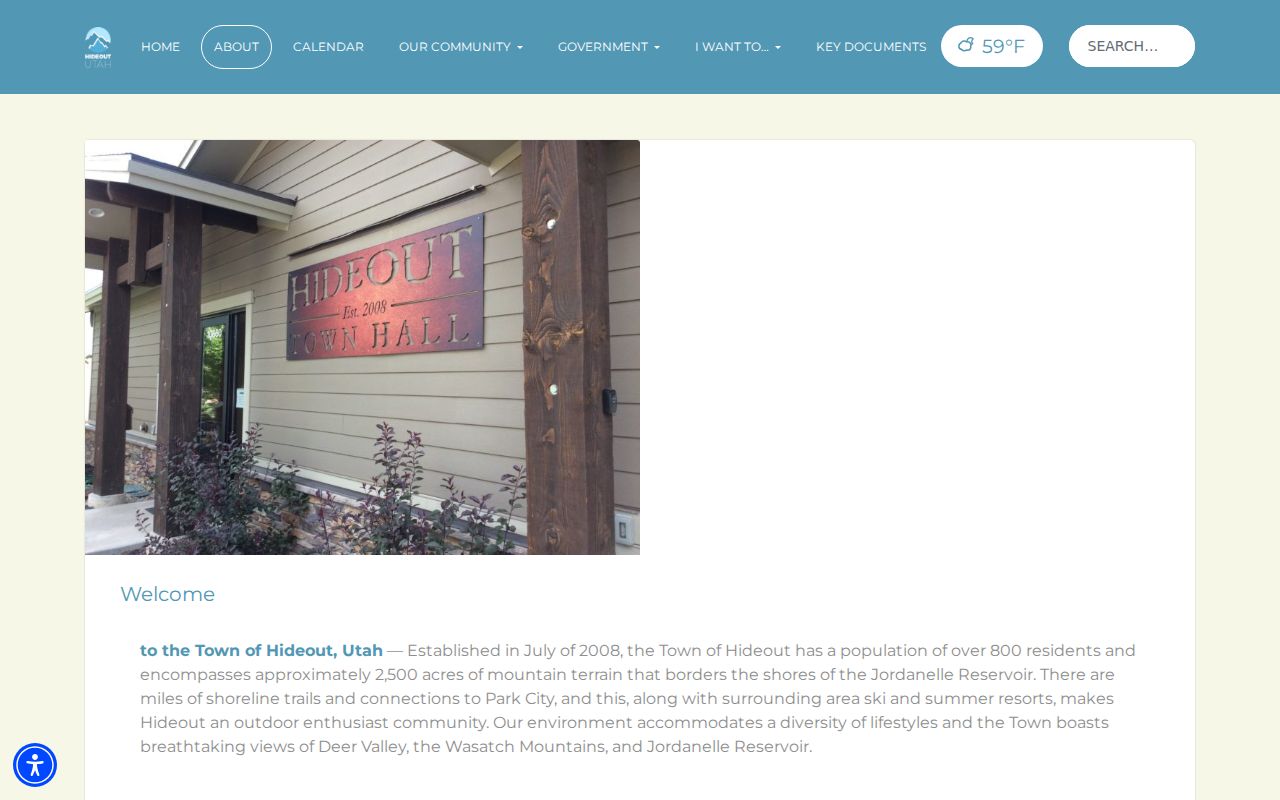
Council and administrative records live at the town office. It cannot replace the Utah court that maintains the case.
Court Dates and Settings in Hideout
Check any Hideout-related setting on the calendar of the court that owns the case. Utah's state calendar lists settings only. Xchange adds history by showing filed motions, prior events, and disposition entries. Parties should also check MyCase and the latest notice.
| Date | The scheduled day shown by the named court. |
|---|---|
| Time | The call or individual setting time, subject to change. |
| Court | The exact court location, which controls where to confirm. |
| Judge | The judicial officer shown for that setting. |
| Setting type | Arraignment, conference, hearing, trial, review, or another event. |
| Status | Scheduled, continued, reset, canceled, or completed when published. |
A reset is not a disposition. Check the calendar close to the hearing date, and call the clerk when the date truly matters.
Hideout History Is Not Confirmation
In 2011, Hideout council minutes recorded an interlocal arrangement. The deal let the town use Wasatch County Justice Court and kept an option to pursue a future system. That document is real historical evidence. It cannot fix the current court for every citation more than a decade later.
Read the dated minutes to see how local administration grew. For an active matter, route with a current citation, the Utah directory, Xchange, and clerk confirmation. That split matters. It keeps an old agreement from becoming a false present claim.
Note the date and the source type. A sound history search records both. Minutes capture what a council approved that night. They are not a live court directory. They prove no unchanged agreement and no current case status. The 2011 document sits in the official town record, open to any reader.
Current proof follows another chain. The newest citation names the court. The Utah directory confirms location and contact. Xchange supplies the public history it holds, and the clerk confirms settings and issues the official record. If sources conflict, ask the named court rather than trusting the older one. That keeps a Hideout court docket tied to current judicial custody.
Traffic Tickets in Hideout
Start with the court printed on the ticket. Type its citation or case number into Xchange along with that court location. Utah Courts ePayments takes a number, court location, and name check. Treat it as a payment tool, not a complete docket.
No result does not mean dismissal. Recheck spelling, venue, court type, and date filters. Then call the named clerk. A matter can be new, restricted, older, or filed under another number. Paying and contesting are separate choices. The current notice plus the court's instructions control both. County-wide ticket context belongs on the traffic record page. Hideout routing starts with the ticket itself.
Hideout Office Keeps Town Records
The Hideout town office sits at 10860 N Hideout Trail, Hideout, Utah 84036. Its published number is 435-659-4739. Council minutes, ordinances, code-enforcement material, and other town administration records may live there. None of that turns into a state-court case file by itself.
Court papers take a different route. Send the request to the judicial custodian instead. Utah's Request a Court Record process asks for a specific description. It separates inspection from copies. The court usually answers within ten business days. Give the case number, the court location, the document, and a useful date range.
Describe the record itself. The word Hideout alone will not do. Say whether you want inspection or a copy. Identify the case and court, and name the filed paper if you know it. Anyone seeking nonpublic material must explain the basis for access and provide any required proof. Research and copy charges can run higher. They may exceed the cost of viewing a public docket summary.
Administrative records deserve the same careful routing. A council-minutes request goes to Hideout Town, along with the meeting date or subject. A judicial request goes to the clerk whose court appears on the case. Keeping those paths apart cuts delay. It also protects sensitive facts that do not belong in a broad town-record request.
Where Hideout Cases Go
Hideout cases do not climb a tidy municipal-to-county ladder. The current court assignment sets the route. A lower-level citation may name a justice venue, while a felony, Class A matter, or broad civil dispute generally belongs in district court. Juvenile work follows its own court and its own access rules.
Docket flow: Hideout event › Named justice or district court › Maintaining clerk
Search the named lane first. If the notice is unclear, use the Utah directory. Then call the listed court before widening the net. Broader background can be checked from the Wasatch County court docket home. The Hideout court docket itself is still a location-specific routing task.
Hideout Docket Fields Need Context
One public result can list a case number, filing date, party code, charge or claim, judge, attorneys, hearings, proceedings, disposition, judgment, and financial entries. Each field means one narrow thing. A charge is an accusation, not a conviction. A complaint is a claim, not a finding. A due date does not prove payment.
- Party code
- The role a person has in the case.
- Setting
- A scheduled or completed court event.
- Disposition
- The recorded resolution of a claim or charge.
- Certified copy
- A clerk-authenticated record, unlike an online summary.
Match the Hideout-related result to the official case number and court before treating any status as final.
Where Hideout Cases End Up
The town source, the justice court, and the district court each hold different records. A Hideout council file stays with the town. A justice case stays with its justice clerk. A district case stays with the Fourth District clerk. An appeal can receive another number and move to an appellate system.
Docket flow: Hideout record or event › Correct custodian › Town file or Utah court record
This custodian-first habit beats treating every Hideout reference as a Wasatch County Justice Court record.
Hideout Court Record Access Rules
UCJA Rule 4-202.02 sorts judicial records into classes. Access then follows Rule 4-202.03. Public case files, indexes, calendars, and some case information can be available, while private, protected, sealed, and safeguarded records remain limited.
Access rule: Xchange excludes sealed, expunged, juvenile, and other nonpublic classes. A missing Hideout result can reflect access limits, venue, spelling, date filters, or older conversion gaps.
Town records follow the town's records process and Utah GRAMA principles. Judicial records follow the court rules. A court-file request never goes to the town just because the event occurred in Hideout.