
How to Search Cases by Name
Type a last name or company name into Xchange, add a first name if you have it, and then narrow the field. Filters for county, court, case type, jurisdiction, and date can shrink the results fast. Match the spelling on your court notice. A common surname can return hundreds of hits. Small traps hide matches too: odd punctuation, a former name, or a missing business suffix. Xchange stops at 500 results. That cap is why scoping your search to Wasatch County and applying every filter you can matters.
- Open the official Utah Courts Xchange search.
- Choose district, justice, or both, then select cases or judgments.
- Enter the last name or company and add a first name when known.
- Limit the scope to Wasatch County, a court, case type, or date range.
- Compare court, case number, filing date, and party role before opening a result.
| Field Label | Type | Required | Notes |
|---|---|---|---|
| Last Name / Company | Text | For name search | Exact and wildcard guidance applies. |
| First Name | Text | No | Narrows an individual. |
| Court / Case Type | Selection | No | Limits jurisdiction and category. |
| Search Scope | Selection | No | Statewide, county, or court. |
| Date Range | Date | No | Filing, disposition, or judgment dates. |
Inside the Wasatch Xchange Search
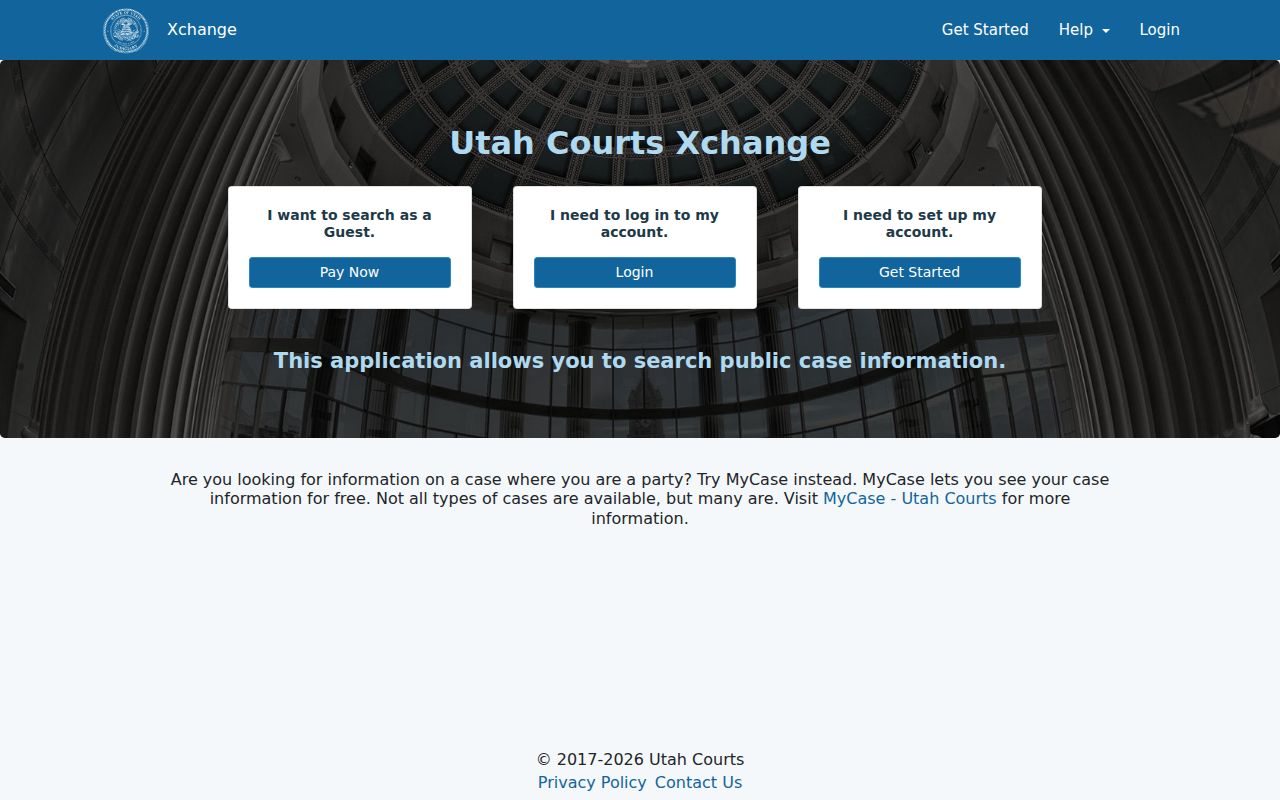
Utah's CORIS court system feeds Xchange its data. The search tools include case number, name, case type, birth date, citation number, and a date range. You can run one query against every Utah court in the service, only Wasatch County, or a single court location. Location is not decoration. A case or citation number is unique only next to its court. The pairing matters. The official Xchange search landing page shows the service entry point along with account notices.
This is Utah's court repository, not a county database of its own. The Xchange search help displays its full field set.
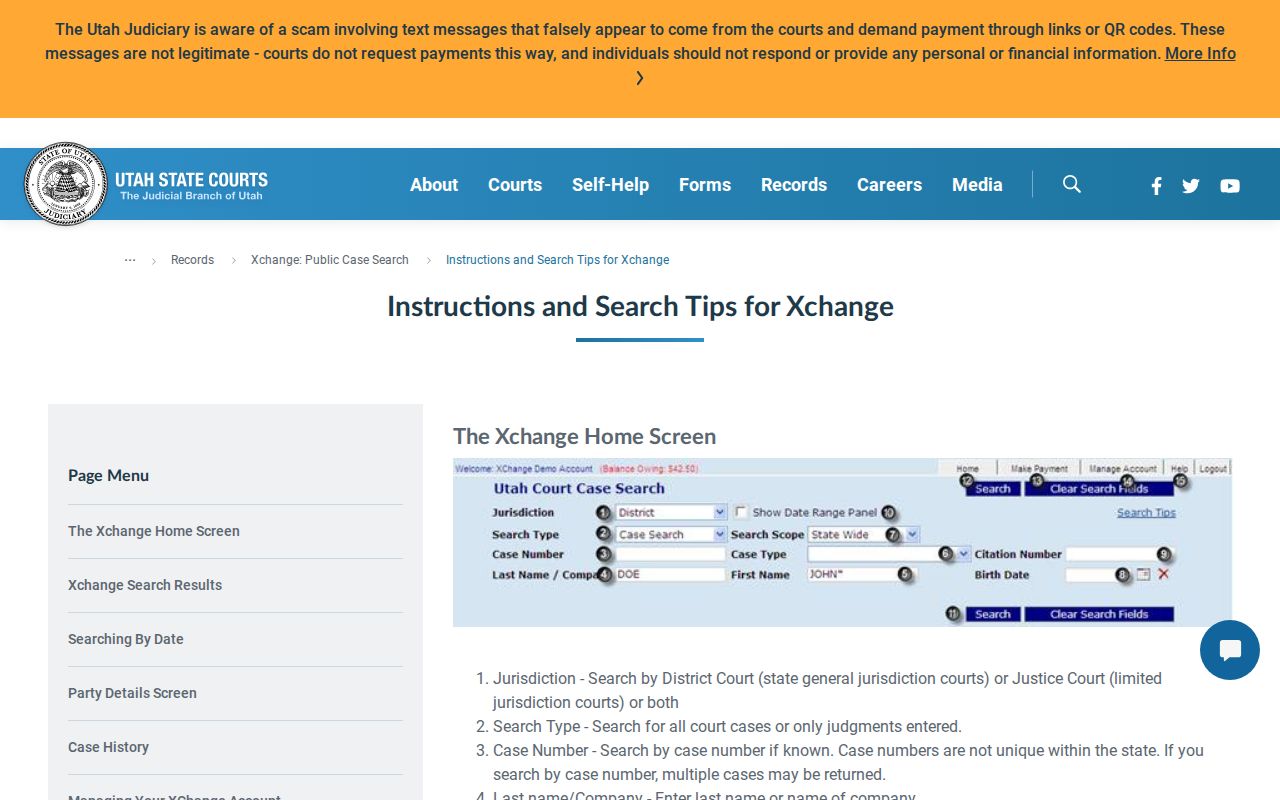
Filters like these cut a common name down to size and keep one Utah court result from masquerading as another.
How to Search by Case Number
Numbers beat names for precision. Utah Courts still warns that a number is unique only with its court location. So enter the full number from your notice and pick the correct Wasatch County court. The coded form may look like YYTT#########: filing-year digits, case-type letters, then a sequence. Real formats vary, though. Copy every character rather than rebuilding the number from memory.
When a number fails, strip stray spaces first. Verify each digit. Then check which court the paperwork names: Fourth District, Wasatch County Justice Court, Heber City Justice Court, or the juvenile court. Keep citations out of this box. A citation number belongs in its own field.
Wasatch Case Codes as Search Clues
Case-type codes sort records into lanes like civil, criminal, probate, domestic, traffic, and small claims. A code points you toward a lane, not an outcome. The official Utah Xchange case-code table defines the current codes.
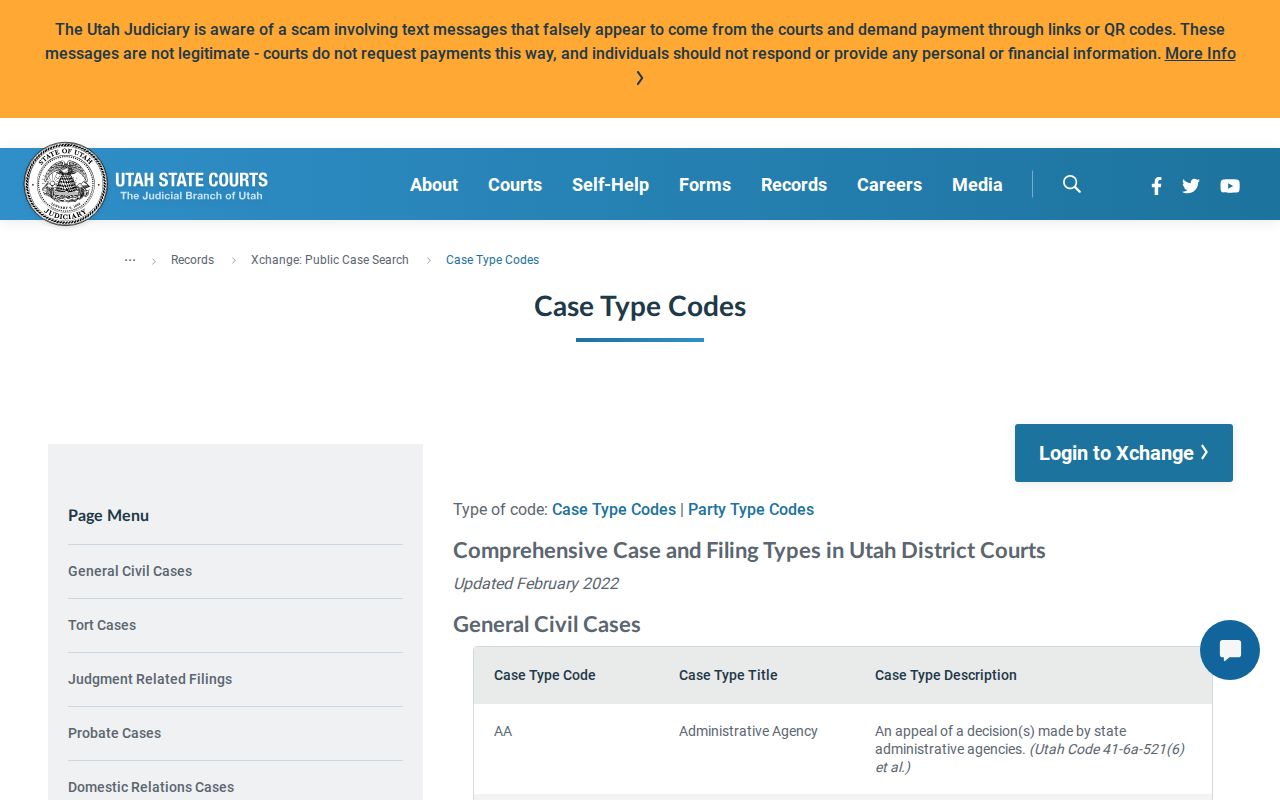
Trust the published definitions over guesswork with initials, especially when two cases carry near-identical numbers or captions.
What a Case Search Shows
What can a Wasatch County result display? Expect the court, its location, case type and number, filing and status data, public party names and roles, charges or claims, judge, hearings, docket entries, dispositions, judgments, and financial entries. Treat it all as a public summary. Pleadings, exhibits, audio files, and protected facts are not automatically online.
| Case Number | The identifier read with the court location. |
|---|---|
| Parties | Public names and roles in the caption. |
| Case Type | The criminal, civil, domestic, probate, traffic, or other category. |
| Filed Date | The date the matter entered the court system. |
| Status | An open, closed, disposed, or other state that needs chronology for context. |
| Hearings and Entries | Settings and chronological public activity. |
Wasatch Search Limits and Filters
A broad Xchange query can freeze at 500 results. Narrow to Wasatch County first, then layer on district or justice jurisdiction, court, case type, and a tight date span. The official Xchange FAQ explains result and privacy limits.
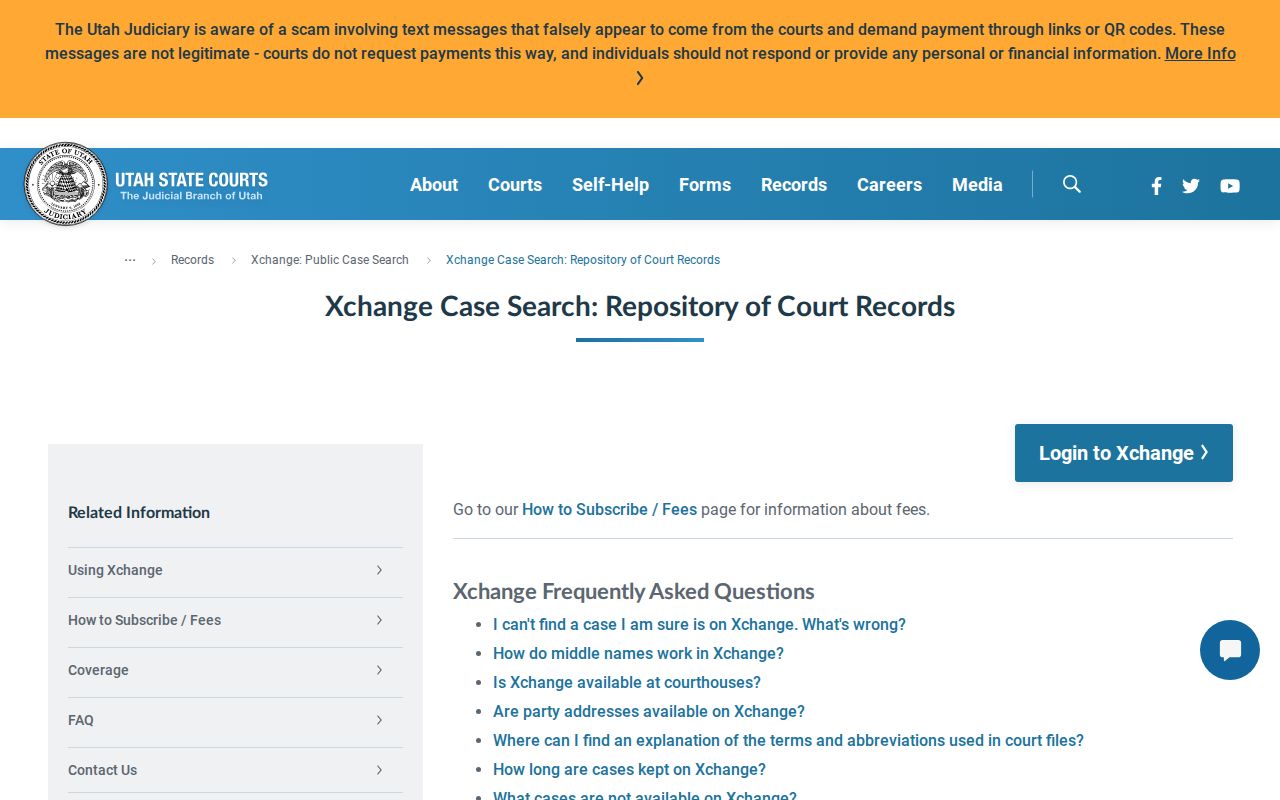
An empty screen is not proof that no court record exists. Wrong location, indexing delays, broad queries, and restricted classifications can all hide a real case from view.
County vs Statewide Case Search
Wasatch County has no separate portal that replaces Xchange. Your real options are statewide or county-scoped Xchange, party access through MyCase, or direct help from the proper clerk. Xchange can be narrowed to Wasatch County without leaving the Utah platform.
| Xchange | MyCase / Clerk |
|---|---|
| Public summaries across participating Utah courts | Eligible linked party cases or one clerk's local file |
| Account and billable search terms apply | MyCase is free; clerk copy fees may apply |
| Best for public name, number, citation, or judgment lookup | Best for your eligible case or a specific document request |
MyCase for Wasatch County Parties
MyCase is free and built for parties. Signup takes an email, a case number, and government identification, plus verification and acknowledgments. Eligible users can see linked case history, papers, hearings, payments, and some self-represented filing options. Not every case type appears there. It is not a public name-search tool. The official MyCase overview describes eligibility and access.
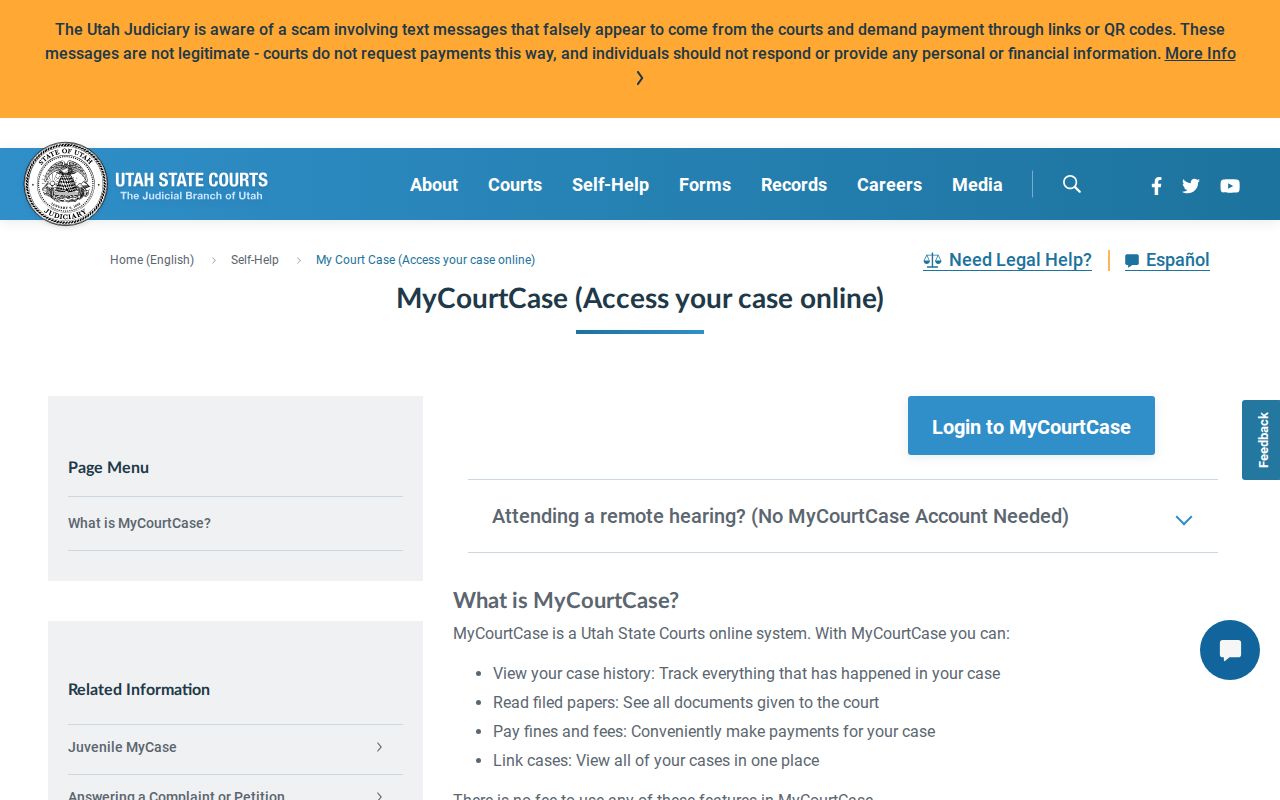
Free party access and Xchange's public search model are two different doors. The Xchange guest registration screen presents its account and fee entry point.
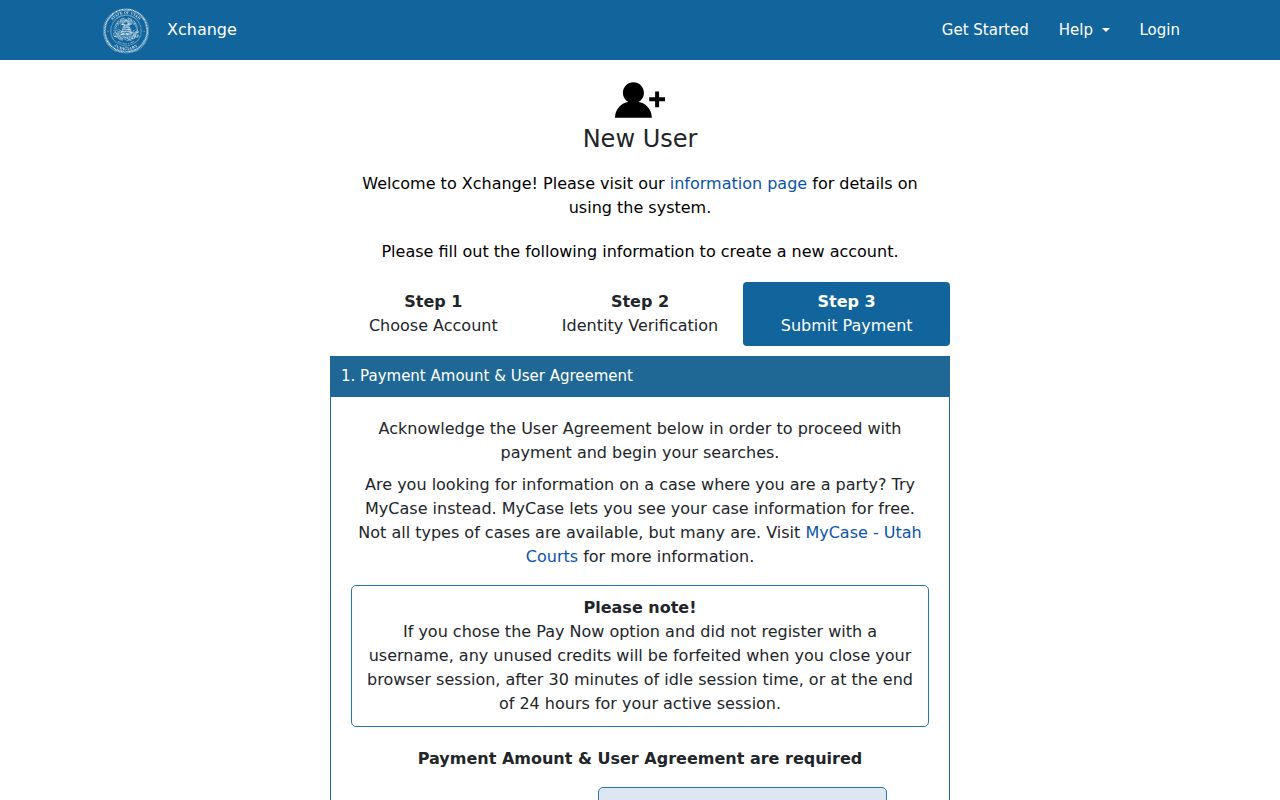
Official pages have shown differing live search prices, so confirm the amount at checkout before you pay.
When a Wasatch Search Finds Nothing
A blank result has many causes. The court could be wrong, the name misspelled, the number incomplete, the record unindexed, or the case nonpublic. Start over with the court named on your latest notice. Searching by number? Pair it with that exact location. Searching by name? Try the official spelling, then a careful wildcard or date filter from the Xchange help pages.
- Confirm whether the matter belongs to district, justice, municipal, or juvenile court.
- Check that a citation number is in the citation field and a case number is in the case field.
- Reduce a result set with Wasatch County, court, case type, and date filters.
- Use MyCase only if you are a party seeking an eligible linked case.
- Contact the maintaining clerk when the official online channels still do not answer the question.
Plenty of Wasatch County docket searches come up empty. That rarely means the case does not exist. The clerk counter still works. So do phone, mail, and the Utah Request for Court Record form. Give the clerk enough identifying detail to pull the right court docket. Do not ask for an open-ended sweep of everyone who shares a name. Fourth District matters go to 435-654-4676. Wasatch County Justice Court matters go to 435-654-2679 or jcwasatch@utcourts.gov.
The clerk also posts weekly public filing, disposition, and judgment reports. Those bulk reports run a week behind. They supplement rather than replace Xchange or a clerk docket search. One more caution belongs here. A court calendar proves only that a hearing was listed. That listing does not mean every filing is public. It also does not mean the case ended any particular way.
Restricted Cases and Access Rules
Not every Wasatch County court record is open to the public. Utah sorts records into classes under UCJA Rule 4-202.02. Rules 4-202.03 and 4-202.04 govern access and requests. Xchange leaves out sealed, expunged, juvenile, and other nonpublic classes. Even when a case header shows up in a docket search, some documents inside it may stay closed. Domestic matters can display only the portions classified as public.
When an expected Wasatch County case is missing from the docket, double-check the court and the case number first. Then call the clerk who holds the record. The Wasatch/Fourth District office answers at 435-654-4676. Wasatch County Justice Court takes 435-654-2679 or jcwasatch@utcourts.gov. The Utah court-record form, mail, and the counter all work too. Getting into restricted records takes a lawful basis and court process.
Read status with the history. An open, closed, or disposed label needs its entries and signed orders for context.
Sometimes a docket search finds the case but not the filing you need. At that point, file a Wasatch County court record request rather than running a wider name query.