
Searching Wasatch County Civil Dockets
Utah Courts Xchange is the public repository to use for a Wasatch County civil docket. Pick District, Justice, or both. Set the scope to Wasatch County or to the exact court. Searching by case number works best. But Utah warns that a case number is not unique statewide, so keep the court location attached to it.
For a party name, start broad. Spellings and business-name variants trip up tight searches. The Xchange help allows a wildcard after a partial last name plus the first letters of a first name. Narrow things with case type after that first pass. Filing, disposition, and judgment dates work well there too. A public terminal and the maintaining clerk offer other channels. Parties with eligible linked matters can use MyCase. It is not a public name-search tool, though.
- Choose Fourth District for broad civil work or the correct justice court for small claims.
- Enter the full case number plus court location, or a carefully formatted party or company name.
- Use Wasatch County, civil case type, and a relevant date field to narrow the result.
- Check party roles, filing date, court, case type, and number before reading the history.
- Ask the clerk for a certified judgment, restricted-paper review, or an older record.
Wasatch Civil Jurisdiction Has Layers
The Utah Fourth District Court serves as Wasatch County's court of general jurisdiction. Its civil docket covers contract and debt disputes. It also covers liens and mortgage foreclosures, condemnation, interpleader, tax matters, domestic relations, probate, property, and more. Small claims run on a separate, limited track. Do not confuse that track with the district side.
The Wasatch County Justice Court takes small claims when the event occurred in Wasatch County. It also takes them when the defendant lives there. Heber City Justice Court applies a similar test. It rests on defendant residence in Heber City or where the debt arose. Check that location rule before you file and before you search.
| Civil matter | Likely venue | Docket clue |
|---|---|---|
| Contract, property, probate | Fourth District Court | District civil case code |
| Domestic matter | Fourth District Court | Access may be limited |
| County-linked small claim | Wasatch County Justice Court | Justice location and claim amount |
| Heber-linked small claim | Heber City Justice Court | Municipal justice location |
Inside a Wasatch Civil Docket
A civil lookup result can show county, court, case type, number, filing date, parties and their roles, attorneys, filings, service events, hearings, judgments, orders, decrees, and account entries. Think of the history as an index and a chronology. It may point to a pleading or exhibit the general public cannot open.
| Case number | The court identifier, paired with the Wasatch County location. |
|---|---|
| Parties | Plaintiff, defendant, claimant, respondent, creditor, debtor, or another role. |
| Filing | A complaint, answer, counterclaim, exhibit, notice, or later paper. |
| Service event | A record that notice or process activity was filed, not a finding on the claim. |
| Motion | A request made to the court and its later ruling, if any. |
| Hearing | A scheduled or completed event, including a reset or continuance. |
| Judgment | A court ruling that may later be satisfied, modified, vacated, or appealed. |
A complaint is only an allegation. A default entry is not always the final judgment. Read the whole sequence before treating the Wasatch County civil docket as resolved.
Wasatch EFile Is Not Xchange
Utah district eFiling is a channel for authorized filers, not a free public docket viewer. Attorneys file through approved electronic services, and some eligible self-represented litigants can submit filings through MyCase. The district eFile portal shows the account-based entry point, and that official page displays how the system handles submissions.
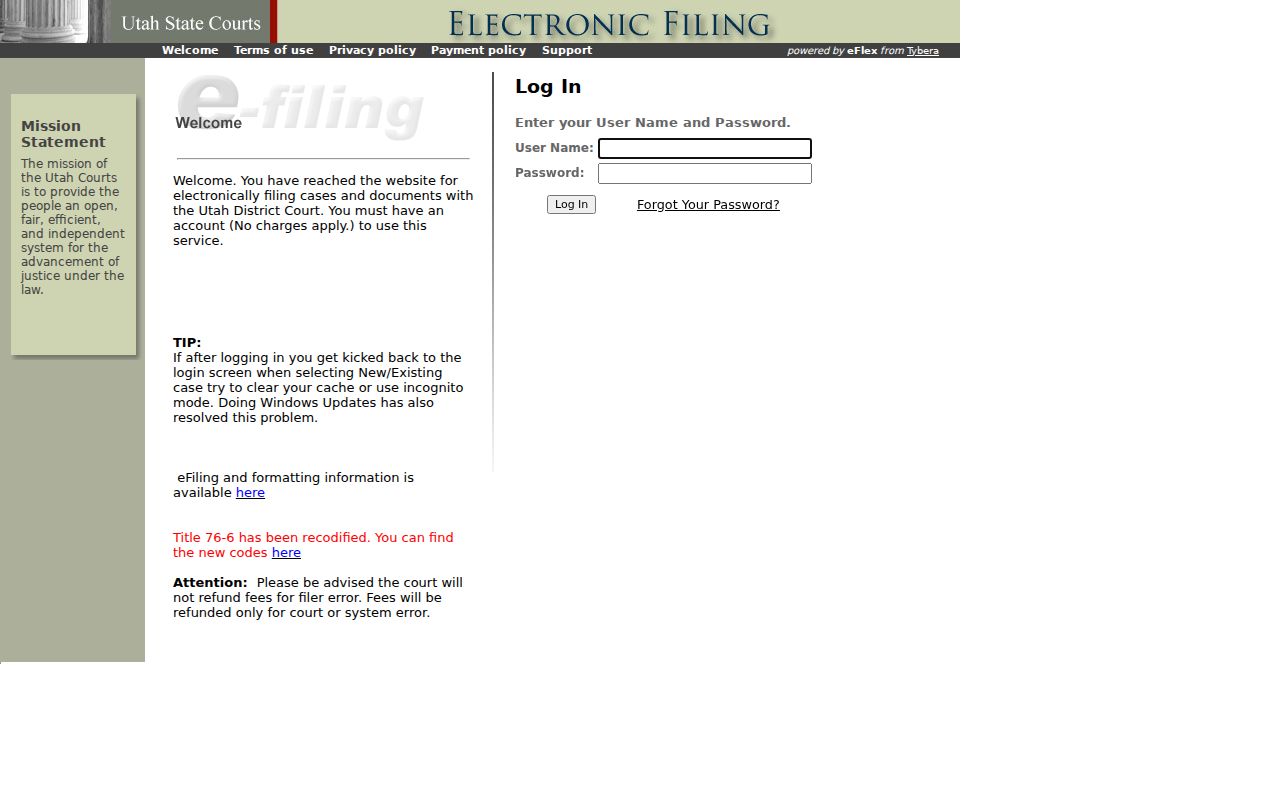
The portal moves filings to the court, while Xchange and the clerk provide the public record paths. Utah Courts also publishes its approved eFiling provider choices, which list the services authorized to submit documents.
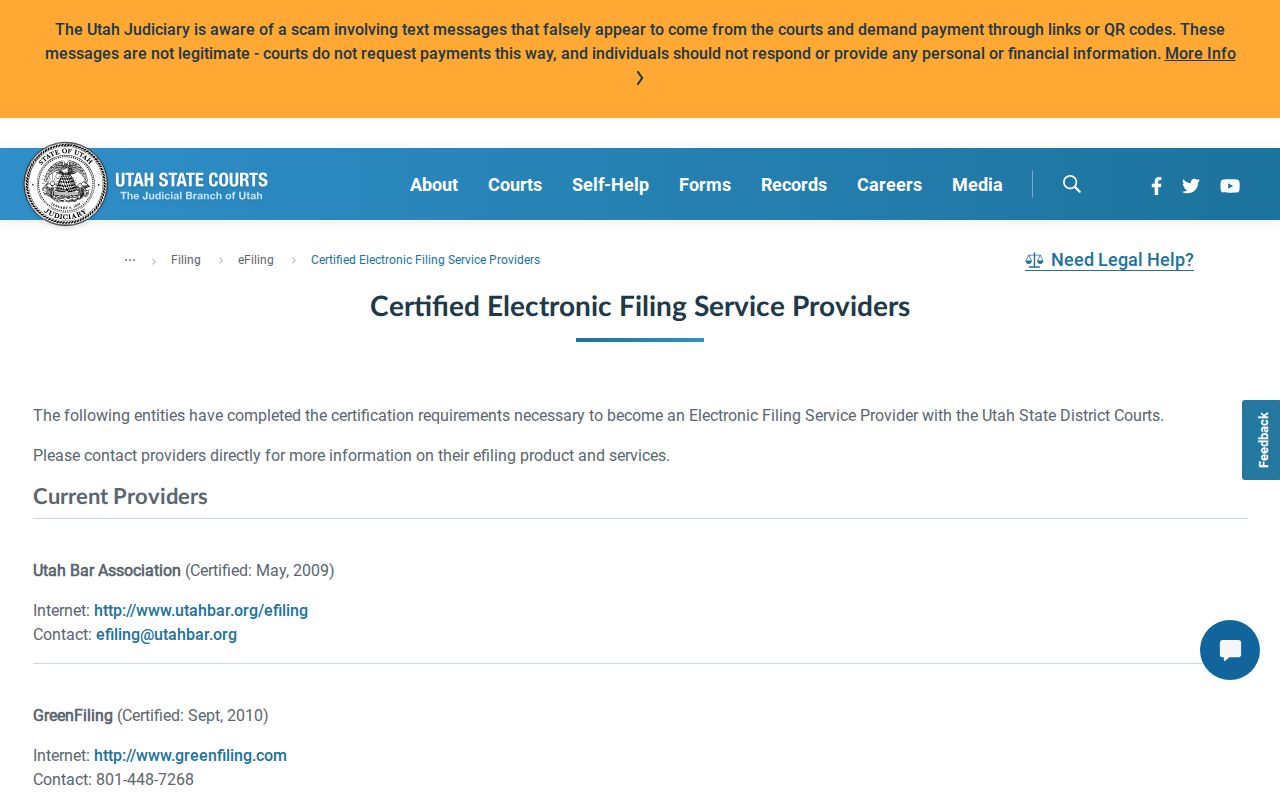
Provider access never changes the Wasatch County civil docket classification or opens a restricted exhibit to the public.
Civil Case Types on the Docket
Xchange tags each filing with a civil code, but a code is not a ruling. "Debt collection," for instance, only names the kind of action filed. It proves no debt, liability, or amount. Codes and public availability can change. Let the official Xchange case-code list control.
- Contract and debt collection actions
- Lien and mortgage foreclosure cases
- Property, condemnation, and interpleader matters
- Tax, judgment, and other civil actions
- Probate and domestic cases within district jurisdiction
- Small claims within justice-court limits
Some domestic, protective, guardianship, and related sensitive categories stay private or restricted. So a broad category list never promises that every Wasatch County civil docket will appear in Xchange.
Wasatch Small Claims Need Care
Fees depend on the claim size. The current Utah Courts fee page, effective May 6, 2026, lists justice small claims through $20,000. It reports a $60 filing fee through $2,000. Claims over $2,000 and under $7,500 cost $100. Claims from $7,500 through $20,000 cost $185. The local Heber page still shows an older, inconsistent upper band reaching $15,000. Trust the statewide figure.
Use the current source: confirm the live statewide limit and fee with the court before filing. An older local page should not override the current judiciary fee schedule.
Heber City also offers Utah Courts online dispute resolution for eligible small claims. Docket entries can come out of that process for participation, agreements, settings, or later court action. It does not change the location test or make a private paper public.
Wasatch Civil Pleadings in Sequence
A Wasatch County civil docket earns its meaning from order. The complaint opens the asserted claim. Service and an answer show the procedural response, and a counterclaim adds another asserted claim. Motions ask the judge to act; orders state what the court decided. A settlement entry may close some or all issues. A judgment can be followed by collection, satisfaction, appeal, vacation, or modification.
- Complaint
- The pleading that states a claim, not a finding.
- Answer
- A party’s response to the complaint.
- Default
- A procedural status that is not always a final judgment.
- Judgment
- The court’s enforceable ruling, subject to later docket events.
- Satisfaction
- An entry stating that a judgment obligation has been met as recorded.
Read the newest entry, not just the first. A judgment line viewed alone can miss a later stay, satisfaction, appeal, or order.
Civil Docket Settings and Hearings
A Wasatch County civil docket entry can carry a lot of practical detail. Expect a hearing date, the event type, the judge, and a courtroom or remote-link detail. The docket also flags whether a setting was continued or canceled. For past context, the register often beats a calendar. It sits the setting among the motions and rulings around it. For a quick check of where to be next week, the calendar wins.
Check the setting against the Utah Courts calendar. Check MyCase if you are a party, and check the newest court notice. A material date deserves one more call to the clerk. When the docket says continued or reset, the date simply moved. The case did not end. Scheduling orders can impose deadlines that never surface as public hearing events. Attorneys get notices through the filing system. Those notices do not make eFile a public search portal, though.
Wasatch Civil Copy Requests
Xchange works well for public summaries and any document links it offers. For certified copies, older records, or questions about the official file, go to the clerk. The Request a Court Record process is another route to inspection or copies. Its form asks for a reasonably specific description. It also separates a request to inspect from a request for production.
Direct the request to the court that keeps the case. Include the Wasatch County court location and the case number. Add the document name and a date range that helps. The judiciary says it generally responds within ten business days. Fees can attach to copies and research. The form treats inspection on its own terms. A certified copy carries the clerk's authentication. An online summary does not.
Civil Docket Access Rules
Utah's judicial record rules govern court files, not any blanket assumption that everything filed is open. UCJA Rule 4-202.02 sorts records into classes, while Rule 4-202.03 sets out who may access them. Written requests, denials, and review are covered by Rule 4-202.04.
Public index, restricted paper: A visible Wasatch County civil docket entry can point to an exhibit or filing that remains private, protected, sealed, or safeguarded.
Some civil classes stay out of Xchange entirely. Adoption, civil commitment, and many family or protective proceedings are among them. A missing result can also stem from a spelling slip, the wrong court, a date filter, or an older conversion gap. An entitled party should turn to MyCase or the clerk, and a public user must respect the court's access decision.